
Spaying and Neutering for Dogs and Cats
Eligibility and Requirements
All patients receive:
- A pre-operative physical exam
- Sedation and anesthesia
- Monitoring of vital signs
- A 24-hour anti-inflammatory injection (meloxicam)
- A 72-hour local anesthetic (bupivicaine)
- A 24 -hour anti-nausea injection (ondansetron or cerenia)
- A small green tattoo on their abdomen to show they’ve been fixed
Additional optional services are available as well, including:
- Flea/tick prevention
- Dewormer
- A pre-operative blood test to check liver/kidney function
- Earmite treatment
- Wound care
- Umbilical hernia repair
- Microchipping
These, and other services can be chosen during the appointment process, or added on the day of surgery.
Benefits of spay neuter include:
- Longer lifespan: Studies have repeatedly shown that spayed or neutered pets live longer, healthier lives on average than those that are not.
- Reduced cancer risk:
- For females, spaying eliminates the risk of ovarian and uterine cancers and significantly lowers the risk of mammary (breast) cancer. This risk is most dramatically reduced when the procedure is done before her first heat cycle.
- For males, neutering prevents testicular cancer and can reduce the risk of prostate problems.
- Prevents serious infections: Spaying females removes the risk of pyometra, a life-threatening uterine infection common in unaltered pets.
- Reduced desire to roam: Intact males often have a strong instinct to escape in search of a mate. This puts them at greater risk of injury from car accidents or fights with other animals. Neutering reduces this desire.
- Improved behavior: Sterilizing a pet often reduces unwanted behaviors driven by hormones.
- Neutered males are typically less aggressive, less likely to mount people or objects, and less likely to mark territory with strong-smelling urine.
-
- Spayed females no longer experience heat cycles, which include behavioral changes like restlessness, increased vocalization, and anxiety.
- Conflicting Evidence: Some research shows there are benefits of delaying spay/neuter in certain animals, especially dogs, until they are fully grown. Owners should consult with their primary veterinarian and engage in research in order to make the best decisions for their pets.
Benefits for pet owners:
- More relaxed pets: With mating-related behaviors eliminated, spayed and neutered pets often have calmer, more even temperaments.
- Reduced stress and mess: Owners of spayed females avoid the messy heat cycle, and owners of neutered males can avoid territorial urine spraying.
- Cost-effective: The one-time cost of the surgery is significantly less than the potential long-term expenses of caring for an unexpected litter or treating health and behavioral problems in an unaltered animal.
| Service | Fee |
|---|---|
| Cat spay/neuter (includes 3 in 1 vaccine, e-collar, anti-nausea medication, and additional long-term pain medication. | $75 |
| Dog neuters (includes e-collar and take home meds) | $150. Additional $50 for dogs over 60 lbs. |
| FERAL/Unowned community CAT spay/neuter package-includes 3 in 1 vaccine, flea/earmite treatment, and a MANDATORY ear tip. Animals must arrive in a trap. | $50 starting March 1, 2025 |
Cat Surgery Guidelines:
For spay/neuter, cats must be at least 2 months old and weigh at least 2 pounds, and be healthy.
Dog Surgery Guidelines:
For the general public we typically only do dog neuters. Puppies must be at least 2 months old, weigh at least 3 lbs., and be healthy. Dogs must be friendly and non-aggressive.
Additional Surgeries
Additional surgeries are offered through Michigan Pet Surgery and Dentistry Clinic. michiganpetsurgery.com
Surgery Information
Check-in time for all animals is listed on the schedule. Your payment is due at the time of check-in.
If we find additional health concerns during our examination of your pet we will contact you and payment will be due at pickup. We accept cash, Visa, MasterCard, Discover, and American Express.
PLEASE LEAVE DOGS IN THE CAR UNTIL INSTRUCTED TO BRING THEM IN.
Cats MUST be in secure carriers AND have a small towel inside it (accidents happen!!). We are not responsible for animals who get loose or lost due to inadequate or unsafe carriers. Do not place beds or thick fluffy items inside of carriers! Animals can suffocate in them from the anesthesia. Carriers need to be clean (minus traveling “accidents”)–your pet is having surgery and will leave here with incisions that can become infected from dirty carriers!
All dogs MUST have a well-fitting collar/harness and leash.
For all cats, and dogs under 6 months: If your animal is under 6 months, you do not need to restrict food or water. Kittens and puppies can have dangerously low blood sugar levels if food is restricted before surgery.
For dogs 6 months and older: Please give them 1/3-1/2 their normal breakfast meal, ideally before 7am. Newer, updated research indicates fasting overnight is not necessary and can prolong the recovery from anesthesia. Water is always fine.
POST-SURGICAL INFORMATION
- Food and water is fine.
- They may not be interested in food after surgery.
- If they eat tonight they may vomit, in which case don’t give additional food until morning.
- They will likely return to normal eating the day after surgery.
- Anesthesia side effects!
- Shaking, whining, and restlessness are normal side effects of the anesthesia drugs.
- These symptoms generally dissipate within 24 hours.
- Pain medication was administered by injection today.
- Don’t give additional pain medication or any over-the-counter pain medications unless directed to by a veterinarian.
- Unless directed otherwise by your veterinarian, continue to give your pet any other medication it is on, per its usual schedule.
For the Next 10 Days
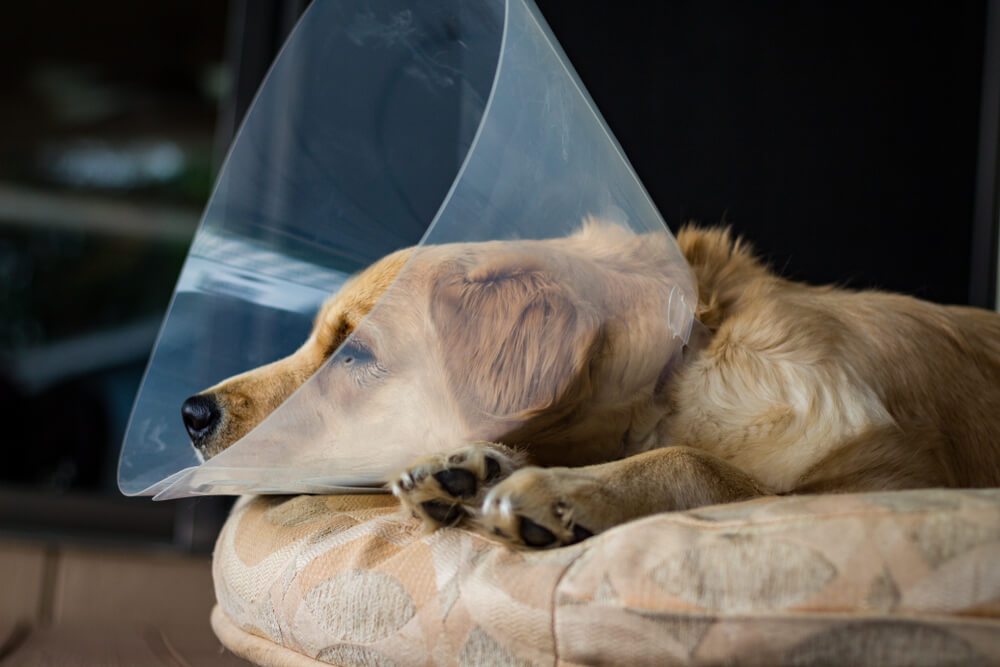
**Wear the e-collar!!**
- Limit their activity.
- Leash walks only.
- No running, jumping or climbing.
- No baths or swimming
- Indoor/outdoor animals should be kept in a clean and warm environment, and all pets should be watched carefully for at least 24 hours after surgery.
- Check the incision twice daily, once in the morning and again at night.
- Some swelling is normal.
- Female cats may develop a seroma or suture reaction over the next week and a half. They usually resolve over time and don’t require treatment. It is rare for cats to herniate their incision.
- Prevent licking of the incision. All female cats are sent home with an e-collar, unless they are small kittens. For small kittens, you can MAKE e-collars out of paper plates: https://www.youtube.com/watch?v=W1A5tzFwRqk
- The sutures used in the incision are dissolvable and don’t need to be removed.
For Rescue & Shelter Groups
We work with numerous rescue and shelter groups across Michigan and our neighboring states. For those traveling a significant distance, we can offer later drop-off times and earlier pickup times. We know how hard it is to find affordable spay and neuter services and do our best to make scheduling adjustments for those who need it.
Dog spays: We only spay female dogs for shelters and rescue groups.
FAQ
What other routine surgeries do you offer?
We offer many routine surgeries such as: umbilical hernia repair, dentals, ear hematomas, degloving injuries, tail amputations, wound care, enucleations, pyometras, entropion (eyelid) procedures, cystotomies (bladder stone removal), small mass removals, etc. We also will do “unblocking” emergencies for male cats.
We do not do trauma-related surgeries or bone fractures. Price depends on the size of animal, type of surgery, etc. We do not declaw cats.
What equipment do you have?
We have full gas anesthesia equipment, autoclave for instrument sterilization, surgical monitoring including Doppler for blood pressure, dental machine, dental x-ray, chemistry analyzer, and the standard supplies and equipment you’d see at most clinics. For other blood work and urinalysis testing we send it to a lab and have the results in 1-2 days. We can provide the same testing capabilities of any veterinary facility.
What are your protocols?
Surgeries are performed under the guidelines by the Association of Shelter Veterinarians’ Veterinary Task Force to Advance Spay/Neuter. This is the gold standard for spay/neuter protocols.
Spay/Neuter Guidelines
Feline Anesthesia Guidelines
What pre-surgical testing is performed?
Per the spay/neuter guidelines, pre-surgical blood work is deemed ideal and recommended, but not necessary for most patients. Blood work may pick up underlying liver/kidney/other issues, but rarely is it so severe as to affect the choice of whether or not to go ahead with surgery. All anesthesia has a risk. If you would prefer your pet receive pre-surgical blood work, contact us ahead of time or see your veterinarian to have it scheduled. We can send out a full panel of blood work for $100. Arrangements must be made to do this at least 48 hours before the surgery.
What additional services do surgery patients receive?
Flea check, nail trim, physical exam, and pain medication.
Why Us?
There are now 3-4 low-cost spay/neuter places in the area to take your pet. What makes us different? We are the only group that provides 3 days of pain medication to female cats and includes e-collars in the cost of the surgery. How is this better for you and your pet? The obvious is your pet experiences less pain and discomfort post-surgery. E-collars significantly decrease the chance of infection post-surgery–which is when most infections occur. All too often animals lick their incisions, try to pull the sutures out, etc., and the owner ends up with a sick cat or an expensive trip to the ER. We decided that it’s in all of our best interests to send every female surgery patient, and large males, home with an e-collar.